

Following a low-sodium diet can make a huge contribution to maintaining heart health, normal blood pressure levels, and overall well-being. For some older adults, reducing the intake of sodium is not just a healthy habit. It can also be related to the treatment of high blood pressure, heart disease, and diabetes.
The problem is that sodium can be found in places where it's least expected. Sodium isn't simply the salt sprinkled on your food. It can also be found in bread, wraps, canned foods, frozen foods, sauces or dressings, and food from restaurants or bakeries. This is why low-sodium foods for seniors are not as easy to find as they should be.
Why Sodium Matters
Excess intake of sodium can cause retention of excess fluid in the body, leading to additional strain on the heart and blood vessels. Some seniors are recommended to follow a more rigorous low-sodium diet than the average individual, which is why it is important to always follow the advice of a medical professional.
At Eldercare, we always remind family members that cutting back on sodium does not mean having to sacrifice tasty food. The process mostly begins with identifying the sources of sodium and making adjustments.
Hidden Sodium Adds Up Quickly
There are many types of packaged foods and prepared foods that have more sodium content than one would suspect. An example would be bread. A sandwich will taste good and perhaps not salty at all, but the bread, meat, cheese, and other condiments can contribute to a high amount of sodium consumed.
Coffee shop food and treats are the same way. What looks like an innocent coffee and snack together can be loaded with more sodium than you suspect. Muffins, bagels, wraps, and specialty drinks can also be higher in sodium content.
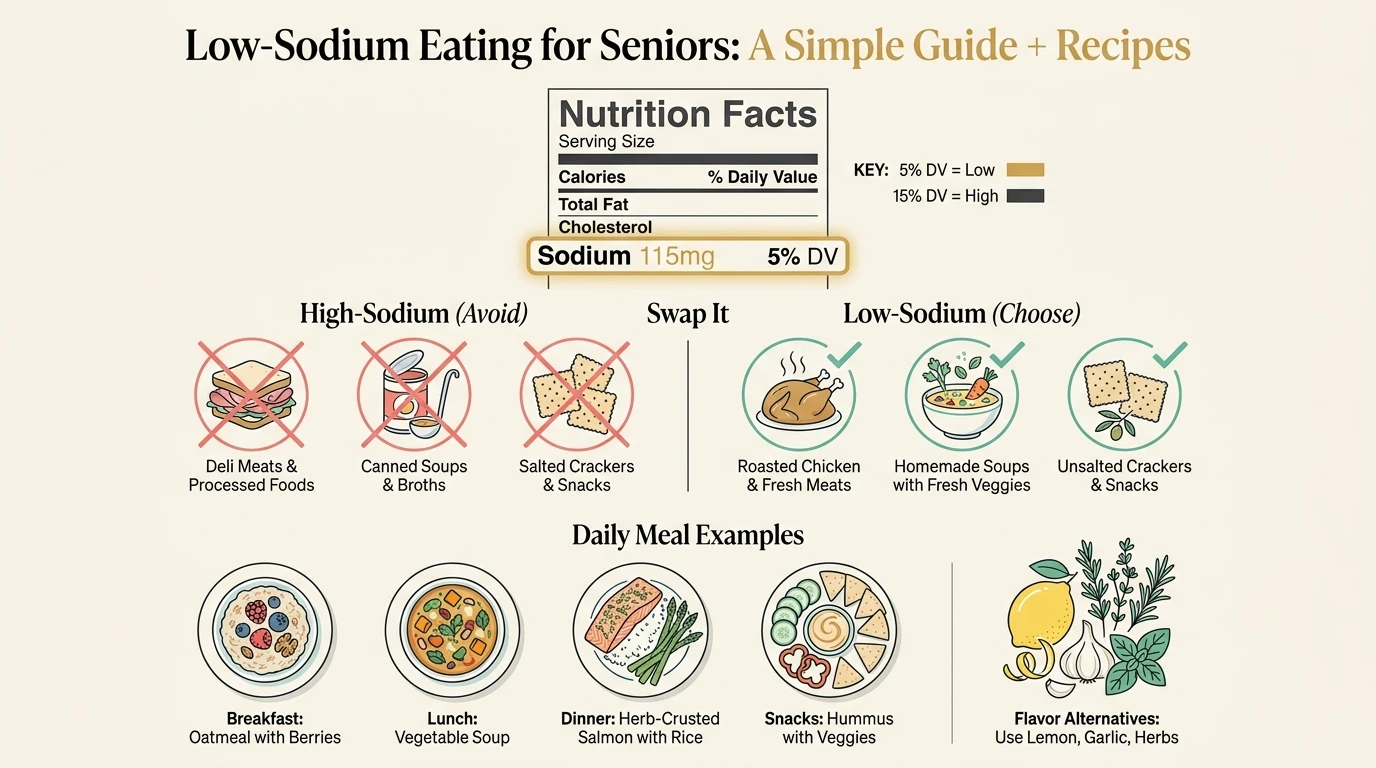
This is what makes reading food labels essential. The front-of-package claim may help, but the Nutrition Facts table will give you all the information you need. Watch out for the serving size and daily value percentage. In general, 5% daily value or less would be regarded as a little, while 15% or more is a lot.
How to Shop for Low-Sodium Foods
Shopping for a low-sodium diet is easy after knowing what to look out for. Always try to buy foods that have either little or no added salt. For instance, buy frozen vegetables as opposed to canned vegetables, unless the can is marked as no salt added. You can also rinse canned beans and canned vegetables to reduce the sodium.
The type of foods that you should look out for include soups that have low-sodium, bread with reduced sodium, plain rice, oats, unsalted nuts, and natural nut butters. Fresh and frozen fish, chicken, eggs, fruits, and vegetables also play an important role since they have lower sodium compared to some other processed foods. Trade-offs are also useful to consider. If one meal is slightly higher in sodium content, you can make up for that by consuming lower-sodium foods throughout the rest of the day. The goal should not be perfection but instead making better choices.
Easy Low-Sodium Swaps
Small changes can lead to big results. Instead of eating deli meats, choose roasted chicken, canned tuna without added salt, or egg salad. Instead of soups in cans, opt for a homemade soup with a low-sodium broth or canned tomatoes without added salt. Instead of salted crackers, choose crackers without salt, cut vegetables or reduced-sodium bread.
Seasonings also play an important role. Many tend to worry that the food will lack any taste when following a low-sodium diet, but there are many things that can add flavor to the food, such as lemons, garlic, onions, herbs, vinegar, black pepper, or salt-free seasonings.
Easy Recipe Ideas
Low-sodium foods for seniors do not have to be difficult. Consider easy choices such as:
Breakfast:
Oatmeal with berries, cinnamon and peanut butter, or yogurt with fruits and unsalted nuts.
Lunch:
Vegetable soup made with low-sodium broth with no salt added tomatoes, beans, and frozen veggies.
Dinner:
Salmon or chicken with olive oil, lemon, garlic and herbs along with vegetables and rice or potatoes.
Snacks:
Fruits, unsalted nuts, plain popcorn, vegetables with hummus or low-sodium crackers with natural peanut butter.
Supporting a Senior at Home
Following a low-sodium diet becomes much easier with some assistance. Support can come from family members who will assist in meal planning, reading labels, and purchasing low-sodium products, as well as preparing simple meals. This approach will be useful for elderly people who are exhausted or recovering from an illness, finding it hard to prepare meals.
Meal patterns and familiar foods play an essential role for seniors living with dementia. In this case, making changes gradually and simplifying the meal process will help minimize stress levels. Dementia care services provided by Eldercare will be helpful for families who are dealing with problems such as routine, meals and activities at home.
Eldercare Home Health provides assistance to seniors and families in all their daily activities for easier healthy living such as meals, groceries, dementia and personal care at home. Contact us to schedule a free assessment and find out how we can assist you or your loved one in living comfortably and independently at home.