
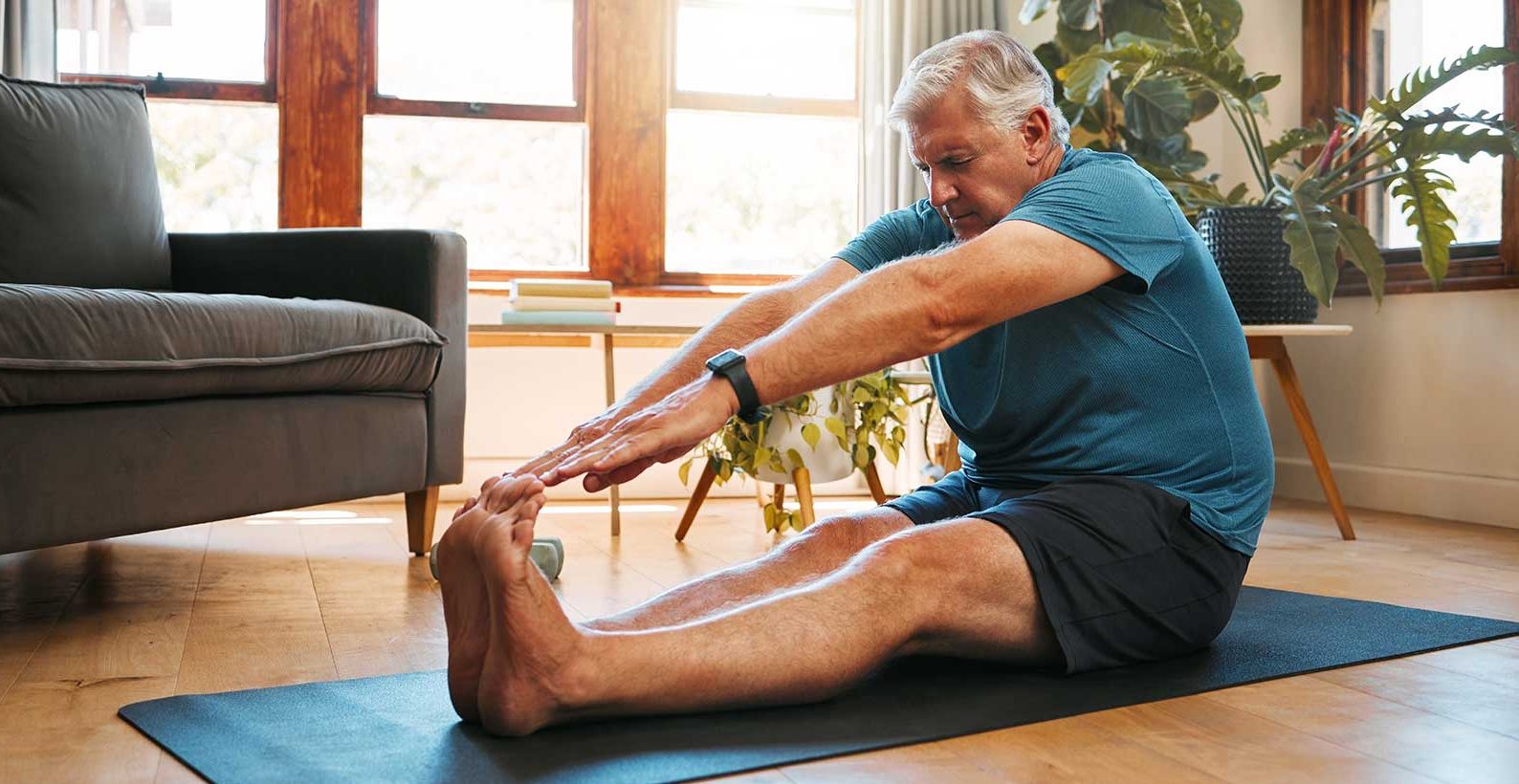
Easy exercises for seniors can be helpful in improving overall stability and confidence during everyday movement. These balance exercises can easily be performed using a steady surface like a table or chair in your home.
Before you start these exercises, make sure you consult a doctor or any other qualified healthcare professional, especially if you have had a recent injury or operation. Don’t forget to exercise in a clear space, wear comfortable footwear, and make sure a stable surface is nearby.
Why Balance Changes with Age
Maintaining balance requires coordination between the muscles, joints, eyes, ears, and nerves. Changes in vision, strength, mobility or certain health conditions can make it harder to balance. Some medications may also lead to dizziness and sleepiness, making balancing more difficult as well.
Fear of falling is completely understandable, however, this reduced activity caused by fear can also weaken the muscles over time. Small steps are significant, and gentle exercise can help everyday activities feel more manageable.
It's important to start off slow. Start by doing a few repetitions and immediately stop if any exercise induces pain, severe dizziness, unusual shortness of breath or faintness.
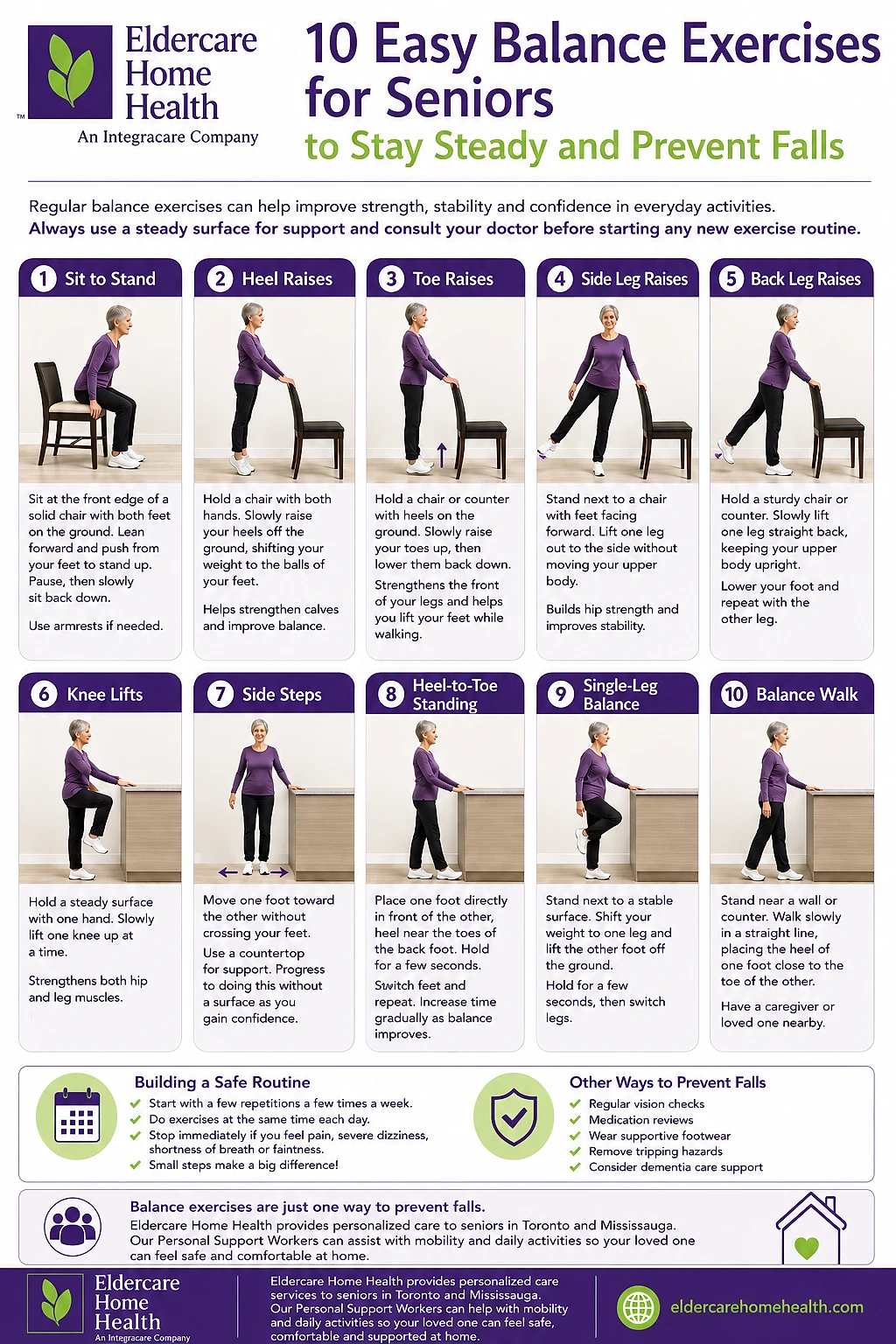
1) Sit to Stand
Sit at the front edge of a solid chair with both feet touching the ground. Gently bend forward and push from your feet to get up. Take a pause and then slowly sit down.
You can use the armrests if you need to. This exercise builds strength in the legs, helping practice a common daily movement.
2) Heel Raises
Position yourself behind a chair and grasp it with both hands. Gradually raise the heels off the ground so that your weight shifts to the ball of your feet.
This exercise is useful for strengthening your calf muscles and maintaining balance while walking.
3) Toe Raises
Hold either a chair or the counter while keeping both your heels firmly on the ground. Raise your toes up slowly, then put them back down.
This exercise targets the muscles at the front of your legs, helping you lift your feet better while walking.
4) Side Leg Raises
Place your feet pointing forward while standing next to a chair. Lift one foot at a time to the side without moving your upper body.
This exercise will assist in developing strength in the hip joints, improving general stability.
5) Back Leg Raises
Grip a strong chair or countertop and raise one leg backwards from your body slowly. Try to keep your upper body straight without bending your back.
Put your foot on the ground again and do the same with the other leg.
6) Knee Lifts
Hold a steady surface with one hand and slowly lift one knee up at a time. Knee lifts sound basic, but are incredibly significant in strengthening both hip and leg strength.
7) Side Steps
Move one foot towards the other without crossing your feet. You can do this with the support of a countertop nearby, and if this feels good, you can eventually work your way up to performing this exercise without a surface.
8) Heel-to-Toe Standing
Position one foot right in front of the other, with the heel almost touching the toes of the back foot. Stay close to a strong surface and hold this position for a few seconds.
Next, change the positions of the feet and repeat. The length of time should be increased gradually only when balance is achieved.
9) Single-Leg Balance
Position yourself next to a solid countertop, handrail, or some other stable surface that will be able to support you. Transfer your body weight to one leg while lifting the other off the ground.
Maintain this position for a short while, then release the leg to the ground and do the same exercise with the opposite leg.
10) Balance Walk
This is almost like the heel-to-toe standing exercise, only this time your whole body is going to move. Stand next to the wall or counter. Take slow steps with the heel of one foot close to the toe of the other foot.
A caregiver or loved one should remain close in case the exercise is too difficult for you.
Building a Safe Routine
Consistency is key when it comes to exercise. Begin with doing a small number of exercises a few times a week, and try to at the same time of the day to make it more of a habit. Your progress can be measured through the number of controlled repetitions that you manage to perform each time.
Balance exercises are just one way to prevent falls. Other measures that could be implemented include consistent vision checks, medication reviews, appropriate footwear, and removing potential hazards within the home. For families who are caring for someone with memory issues, dementia care is extremely helpful as well.
Eldercare Home Health offers personalized care services to seniors living in Toronto and Mississauga. Our Personal Support Workers can assist with mobility issues and ensure that loved ones are safe and comfortable while performing daily activities, wherever they call home. Contact us to book a free assessment and find out how you or your loved one might benefit from additional care.