

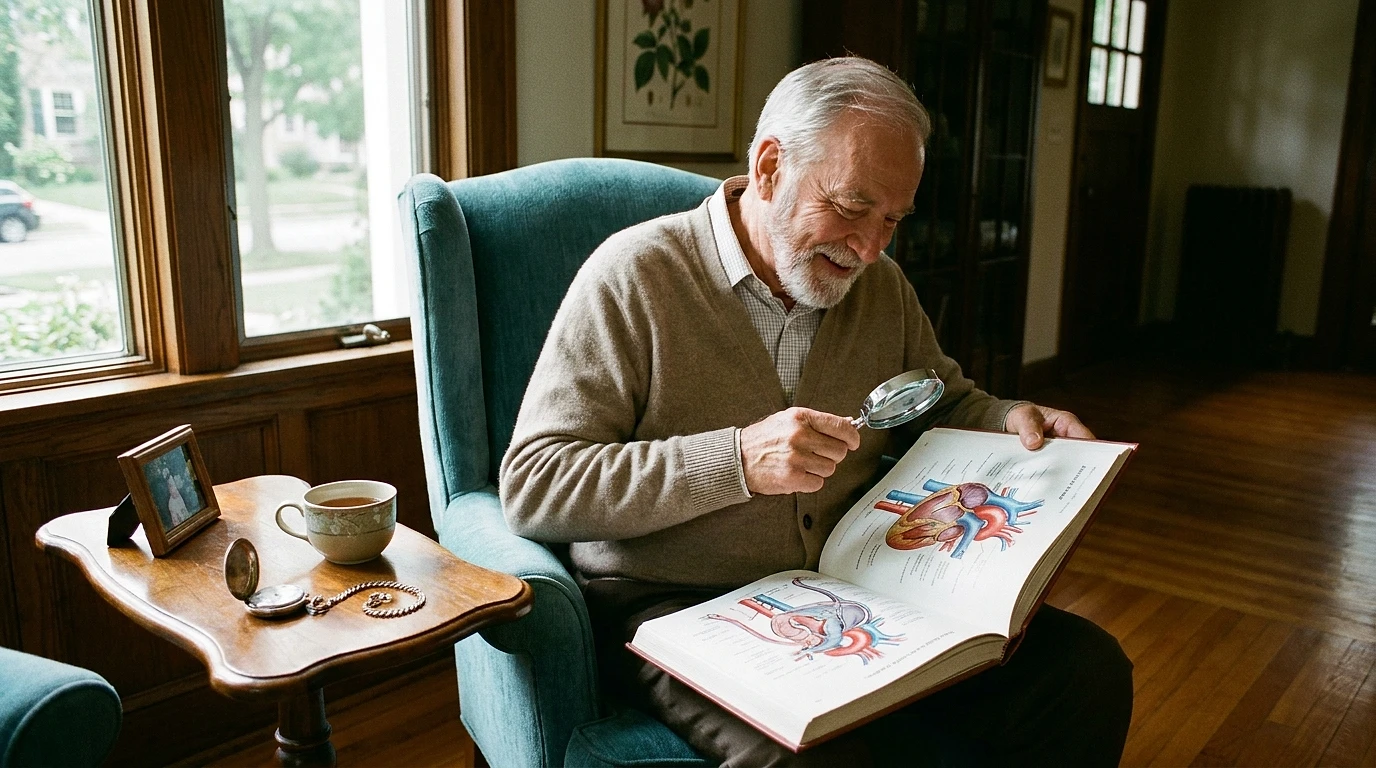
As we age, our bodies undergo several changes, some of which can be hard to imagine. It’s no secret that aging is a natural part of life, but did you know that you have a blind spot in your eye, or that if you live to be 80 years old, your heart will have beaten approximately 3,363,840,000 times? These are just a few of the amazing facts about aging that we’ll be exploring in this blog post.
It's not just about wrinkles and grey hair. The human body continues to adapt throughout life, and most of the alterations that take place during the process of aging are actually quite interesting. Here are some interesting facts about aging that will alter your perception about growing older.
What distance would all the arteries, veins, capillaries and even tinier blood vessels in your body reach?
About 100,000 miles in an adult – that’s a little more than four times around Earth – and around 60,000 miles in a child.
How much blood does your heart pump in a lifetime?
About 44,000,000 gallons in an average lifetime – enough to fill three supertankers!
How many times does your heart beat in a lifetime?
If you live to be 80 years old, your heart will have beaten approximately 3,363,840,000 times!

2 brains are better than one!
How many brains does your body have?
Seems like a no-brainer, right? Surprise! You actually have two brains in your body – the one in your head and another in your gut. Your head brain and spinal cord comprise the central nervous system and the “brain” in your gut runs the enteric nervous system, your digestive system. The enteric nervous system actually produces more serotonin – beneficial to your mood – than your head brain does.
How many neurons are there in your brain?
You’ve got about 86 billion neurons in your noggin. That’s almost as many – by one estimate – as the number of stars in our galaxy, the Milky Way – about 100 billion. Imagine how busy they are while receiving, processing and transmitting incoming information and forming neural networks to enhance your brain power!
Fascinating, is it not? In fact, your brain continues to make new connections even as an adult. Remaining socially active, acquiring new knowledge, reading, and doing mental exercises all work towards keeping your brain active.
How many hairs are on your head?
The human body has about 5 million hair follicles. On our head, blondes have an average of 150,000 hairs, the average redhead has 90,000. Those with black or brown hair average 100,000 to 110,000 hairs.
How many taste buds are there on your tongue?
You’ve got around 2,000-8,000 taste buds on your tongue itself, according to Encyclopedia Britannica. Some sources say fewer, some say more. But there are about 10,000 on your tongue, lips, cheeks, palate and esophagus. And you thought your tongue had all the fun! Sad to say, after age 60, the number of taste buds declines and each of them shrinks. So our sensitivity to flavours as seniors really diminishes. This is one reason why many older adults start to prefer more flavorful or seasoned food as they age.

Ear anatomy
As you age, why does your hair sometimes stop hearing?
Well… kind of your hair. Your ear is actually a very complex structure. Inside your ear – in the cochlea – there are hair cells that ride the sound waves, bend, and ultimately convey an electrical signal to your brain. The trouble is, as you age, your ears are exposed to a never-ending barrage of loud and prolonged noises. The cumulative effect is that over time, these loud and prolonged noises damage the sensory hair cells in your ears. The high sounds tend to go first, which is why us older adults are forever shouting, “Wh-a-a-a-a-t?” to our loved ones (see my blog post on how amazing it was to get hearing aids). We can hear them, but the sharp edges are muffled. There’s not much we can do to prevent this, because we can’t rewind our life and stay away from those destructive sounds. Preventing yourself from excessive exposure to noise and frequent hearing tests can help you detect any changes. Of course, we can compensate for the problem with hearing aids, which I’ve done to my great joy.
How long can fingernails grow?
The world’s record-holder for total length of fingernails on one hand cut them after growing them for 66 years. The combined length of all the fingernails on that hand was 29 ft. 10.1 inches! Nail biters need not apply.
How much does your body shrink as you age?
Another amazing fact about aging! Men shrink about an inch between ages 30 and 70. Women: as much as two inches. After 80, men and women may lose another inch. When I was young, I was about 6 ft., 2 ½ inches tall. Now, if I stretch, I can make 6 ft., 1 inch. Why do we shrink? There are a number of contributing factors. Shrinking cartilage between the spinal segments. Osteoporosis that weakens bone and makes it more likely to fracture, which can lead to shortening. Even loss of lean muscle mass, called sarcopenia, and slouching. Can we seniors fight off shrinkage? Yes, with better nutrition, exercise, conscious avoidance of slouching, limited use of alcohol and coffee, not smoking and by avoiding extreme diets and steroids. Luckily, with strength training, proper diet, and physical activity, it’s possible to retain one’s posture, muscular power, and bone strength as time passes by.

Do you have a blind spot in your eye?
We all have a blind spot in each eye because there are no optic receptors where our optic nerve connects to the retina. Without this connection, we wouldn’t be able to see. The blind spot is left of center in our left eye, and right of center in our right eye. Try this amazingly simple and quick test to find your blind spot.
Can you really hear a pin drop?
Sound is measured in “decibels.” There is a scientific definition called “the hearing threshold” – 0 decibels (dB) loudness, at 1000 kHz. KiloHertz is a measurement of how high or low a sound is. A pin hitting a hard surface from a height of 1 cm, heard from 1 meter away, makes a 15 dB noise. Sounds above 85 dB can cause hearing damage. No wonder we don’t like the 85dB noise of a passing diesel truck or a snowblower. As for rock bands – you might as well listen to a jackhammer – both are about 110 dB!
How long are your intestines?
On average, just under 28 feet. That’s about the length of two Toyota Corollas, parked nose to tail. The time it takes for food to pass through your digestive system varies among individuals and among men and women. In a Mayo Clinic study, it averaged 54 hours – a little over two and a half days.
How many people can roll their tongue lengthwise?
From 65% to 81%! Although widely thought to be a genetic trait, research has shown that rolling the tongue is also a learned skill. You may want to think twice before investing the time to master this skill – It might be an amazing fact about aging but it’s not like it’s going to make you any money.
Bat man? Yes. Many sightless people can navigate by sound
Many sightless people can navigate by “echolocation” – the same way bats “see” in the dark. Echolocation in humans is a learned ability to hear echoes of sounds they make and how those sounds bounce off various objects – from stomping their foot to tapping a cane to clicking their tongue. Studies have shown that the blind not only learn to distinguish sound better than the sighted, they also recruit the occipital part of the brain (where sight is processed) to echolocate. One study revealed that people who are blind seem to compensate with experience for the decline in inter-aural hearing as they age.
Which two body parts almost never stop growing?
 It may sound crazy, but your nose and your ears keeps growing, and growing, and growing. I know some of us seniors blame our increasingly large noses and ears on gravity, but science says it isn’t so. The cartilage in our nose and ears actually grows until we’re about 85!
Staying Active Benefits Both Body and Mind
The best thing about aging is that it is never too late to adopt healthy behaviours. Exercise, eating right, being socially active, and learning throughout life are all habits that encourage healthy aging.
Rejoice in your body!
Really, even if your body is getting a little old and creaky, it’s still a marvel! We hope you enjoyed these amazing facts about your aging body!
Contact us to schedule a free assessment and find out how we can assist you or your loved one in living comfortably and independently at home.